Technical Deep Dive: Qatar's 5G Infrastructure
A precision analysis of the latency, topology, and capacity powering Qatar's digital frontier. Built for Network Architects, RF Engineers, and Strategy Leaders.
Explore the Network ArchitectureThe Physics of Instant
In Qatar's 5G network, latency drops below the human perception threshold of 10 milliseconds, often reaching 4–7ms in ideal conditions. This isn't just "faster"—it operates within the speed of neural transmission.
Remote Intervention Scenario
Scenario: A Doha-based interventional radiologist manipulates a catheter guide wire in a satellite clinic in Al Wakrah. The tactile feedback loop—transmission of resistance data from the patient to the surgeon's console and the command signal back—must remain under 10ms to prevent motion sickness and ensure precision.
Constraint: Fiber distance and switching overhead. Qatar's distributed edge compute nodes are placed specifically to keep the round-trip data path within a 30km radius.
Tactile Internet & V2X
For the Lusail Expressway, vehicles communicate V2X (Vehicle-to-Everything) data to edge nodes. The network prioritizes safety-critical packets (emergency braking alerts) over infotainment, ensuring 99.999% delivery rates.

Fig 1. The '1ms Window': Human intent meets mechanical action. Haptic data transmission requires strict temporal consistency.
THE LIGHT CONSTRAINT
1 millisecond equals 300 kilometers of light travel in a vacuum. In fiber, it's ~200km. In air, it's ~300km. Qatar's geography dictates that for sub-10ms latency, edge computing must be localized, not centralized.
The Invisible Grid
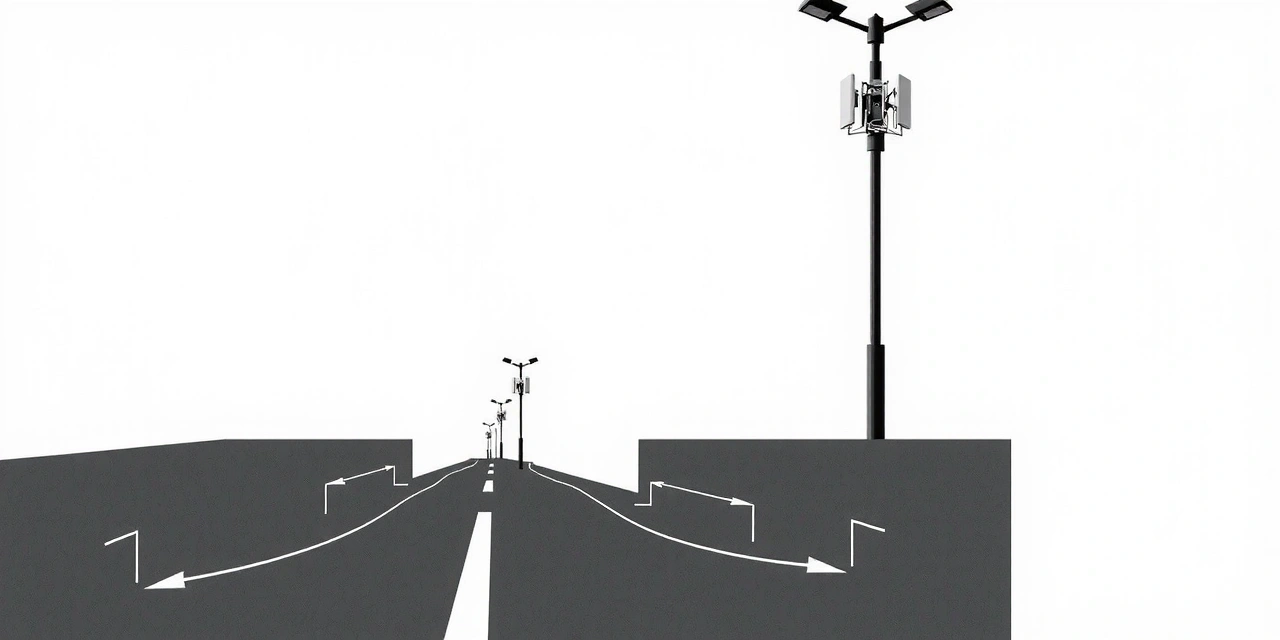
Qatar's 5G topology is a layered architecture. Tall macro towers provide the wide-area canvas, but the detail—the capacity—is painted by thousands of small cells mounted on lampposts and building facades in The Pearl, West Bay, and Lusail.
Beneath this air interface lies the nervous system: a dense mesh of dark fiber. While the consumer sees the radio waves, the strategic value lies in the backhaul. In Qatar, fiber availability at cell sites is the primary enabler for mmWave deployment.
The 'secret sauce' for density. It steers signals electronically, avoiding interference in Doha's concrete canyons.
High frequencies (mmWave) are blocked by glass and concrete. Design requires precise 3D modeling of the skyline.
Dedicated virtual lanes for Media, Ops, and Fans running over one physical grid.
"In the 4G era, we planned for peak hours. In the 5G era, we plan for peak moments." — Senior RF Engineer, Vodafone Qatar
The Capacity Multiplier
The defining stress test for Qatar's 5G is the "Stadium Scenario." During a World Cup match, the data load is equivalent to a mid-sized city compressed into 90 minutes.
Older networks collapse under this weight, resulting in throttled video and failed transactions. 5G handles this through massive MIMO (Multiple Input Multiple Output) antennas that serve dozens of data streams simultaneously, not just one big pipe.
Micro-Scenario: The Instant Replay
A fan in the upper tier requests a 360° replay of a goal. The request is routed to an edge server in the stadium parking lot, processed, and streamed back to the phone in 14ms. The file is 40MB. 4G would buffer; 5G delivers it instantly.
The Deployment Decision Lens
Criteria for selecting Indoor vs. Outdoor Small Cell strategies in Qatari infrastructure.
Outdoor (Lamppost/Wall)
Indoor (Enterprise)
Critical Trade-offs
- Coverage vs. Latency Wider cells increase propagation delay. Densification is mandatory for sub-10ms.
- mmWave vs. Penetration Speed is unmatched, but signals stop at tinted glass. Indoor pass-through is the bottleneck.
- Density vs. Aesthetics Qatar's architectural standards require seamless integration. Small cells must be invisible.
Field Glossary: Terms with Context
The high-frequency band (24GHz+) that offers gigabit speeds but has short range and poor building penetration.
Field Note: "Use mmWave for open-air venues (stadiums, The Corniche). Avoid it for legacy buildings in Doha without fiber-fed indoor systems."The ability to create multiple virtual networks on top of a single physical 5G infrastructure.
Why it matters: It allows a hospital to guarantee bandwidth for MRI data transfer, while the cafeteria uses the same physical tower for TikTok.A signal processing technique that directs radio waves to specific devices rather than broadcasting in all directions.
Trade-off: Increases spectral efficiency significantly but requires complex antenna arrays and precise tracking of device location.Planning a Deployment?
Whether you are upgrading a hospital in Al Kharaitiyat or planning coverage for a new smart city district, our engineering team provides the technical dossier you need.
Contact Engineering